FOUNTAIN IN THE MAIN SQUARE
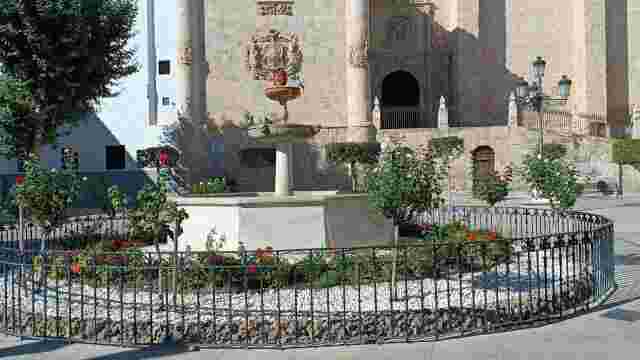
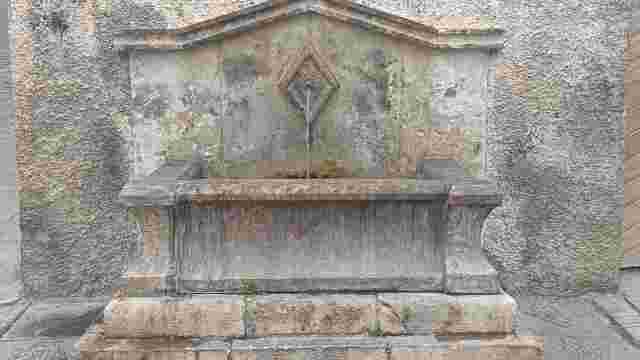
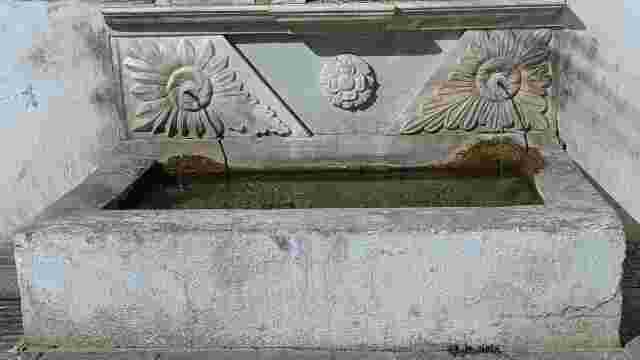
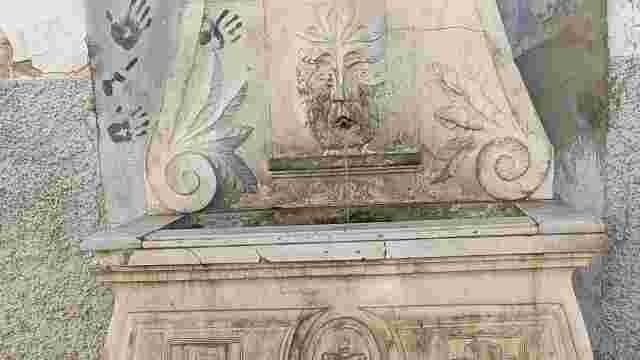
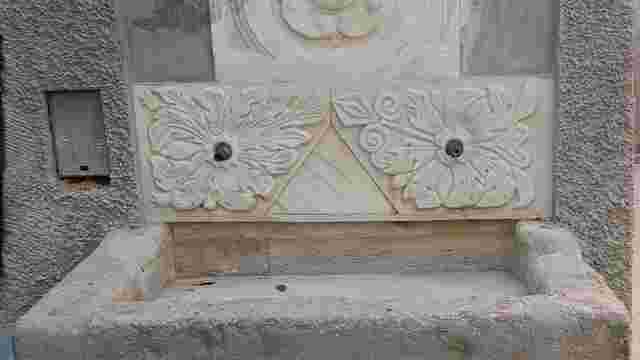
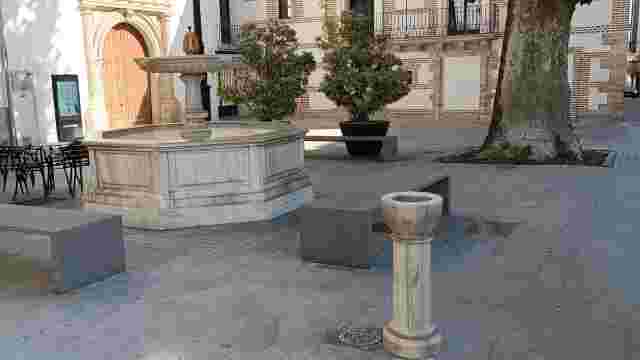
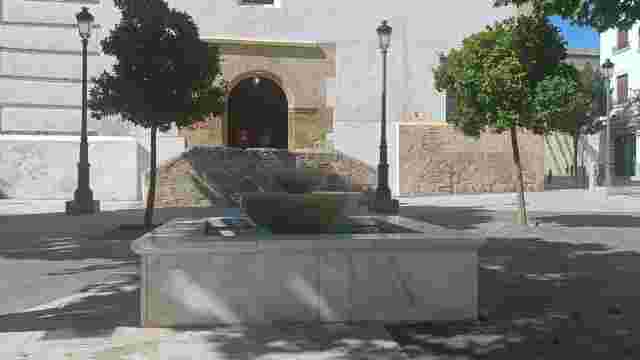
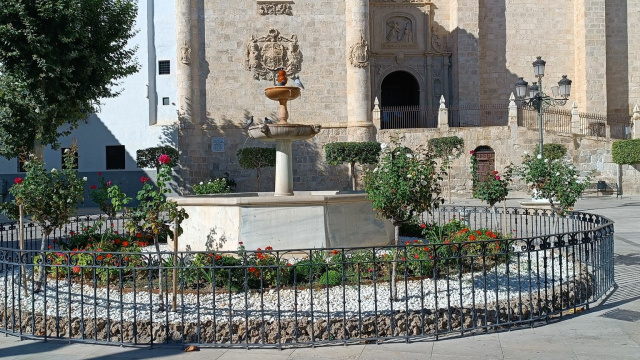
Throughout the 19th century, the new vision of the city gave impetus to an ambitious urban beautification project. Squares and small squares began to be defined by the presence of monumental buildings, fountains - many of which had been rescued from the cloisters of disentailed convents - and pillars of very different types. These elements, made of noble materials such as stone and marble, not only decorated but also marked the character and identity of each public space. In this context, on 18 September 1873, a fountain located in the Alameda was moved to the centre of the Plaza Mayor, which had lost the fountain that had adorned it since the 16th century. The delicate and meticulously planned operation was awarded by auction and strict conditions were established to avoid any deterioration. The marble pieces were also ordered to be cleaned during the dismantling process. To cover the costs, the proceeds obtained during the fair from the fees paid by the livestock guides were used, and the remainder was made up with funds from other budget chapters. The final cost of the intervention amounted to 1,980 reales. This intervention incorporated, albeit on a small scale, an enclosed garden around the fountain, delimited by a set of rockeries and an elegant gate. The idea followed the European trends that promoted the creation of landscaped spaces around sculptures or fountains, inspired by the English square model and nearby examples such as the remodelling of the Plaza de Bib-Rambla in Granada in 1866. This type of design, which was widespread in many Spanish cities in the 19th century, was particularly prominent during the Elizabethan period and the Restoration.